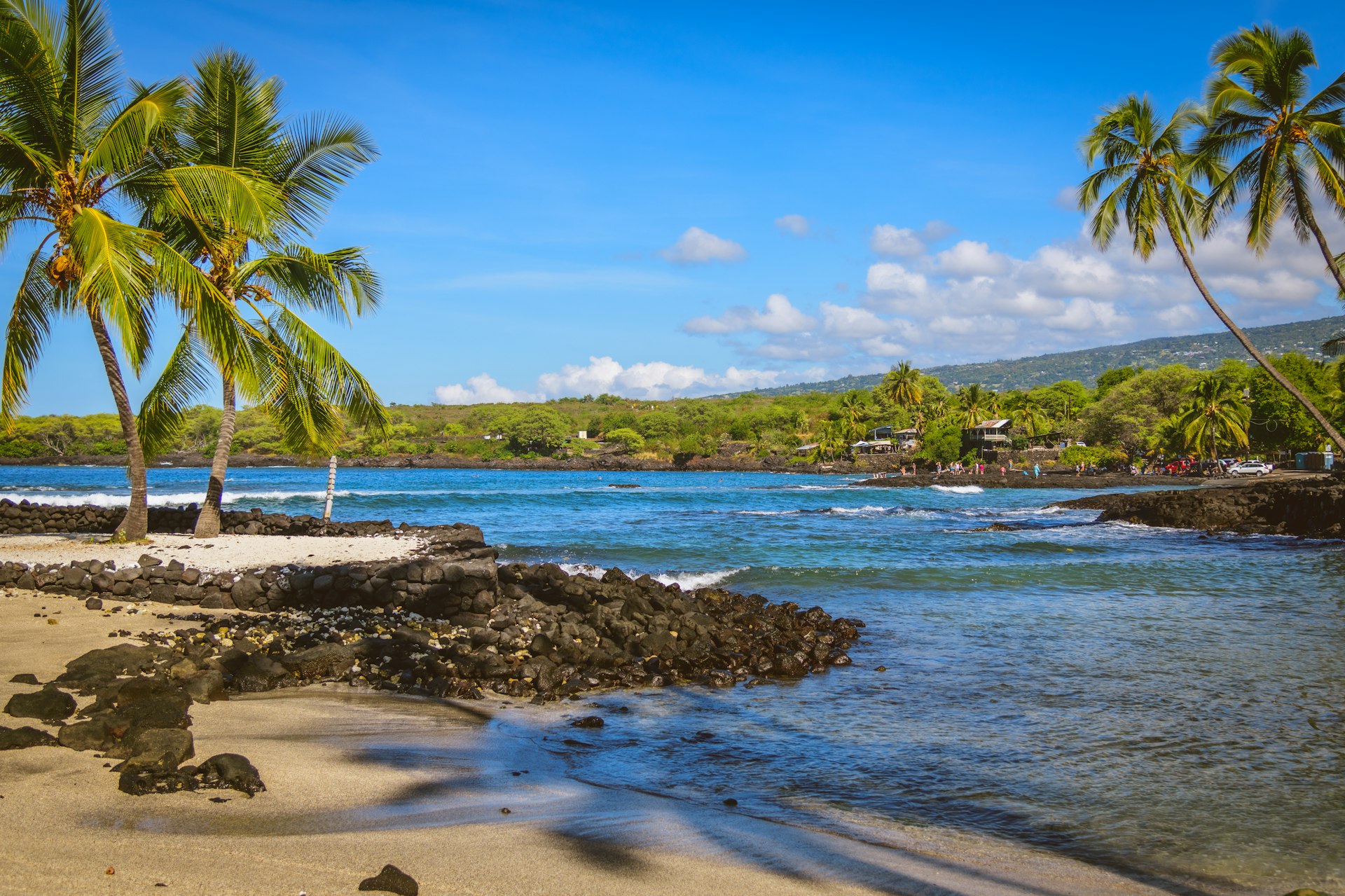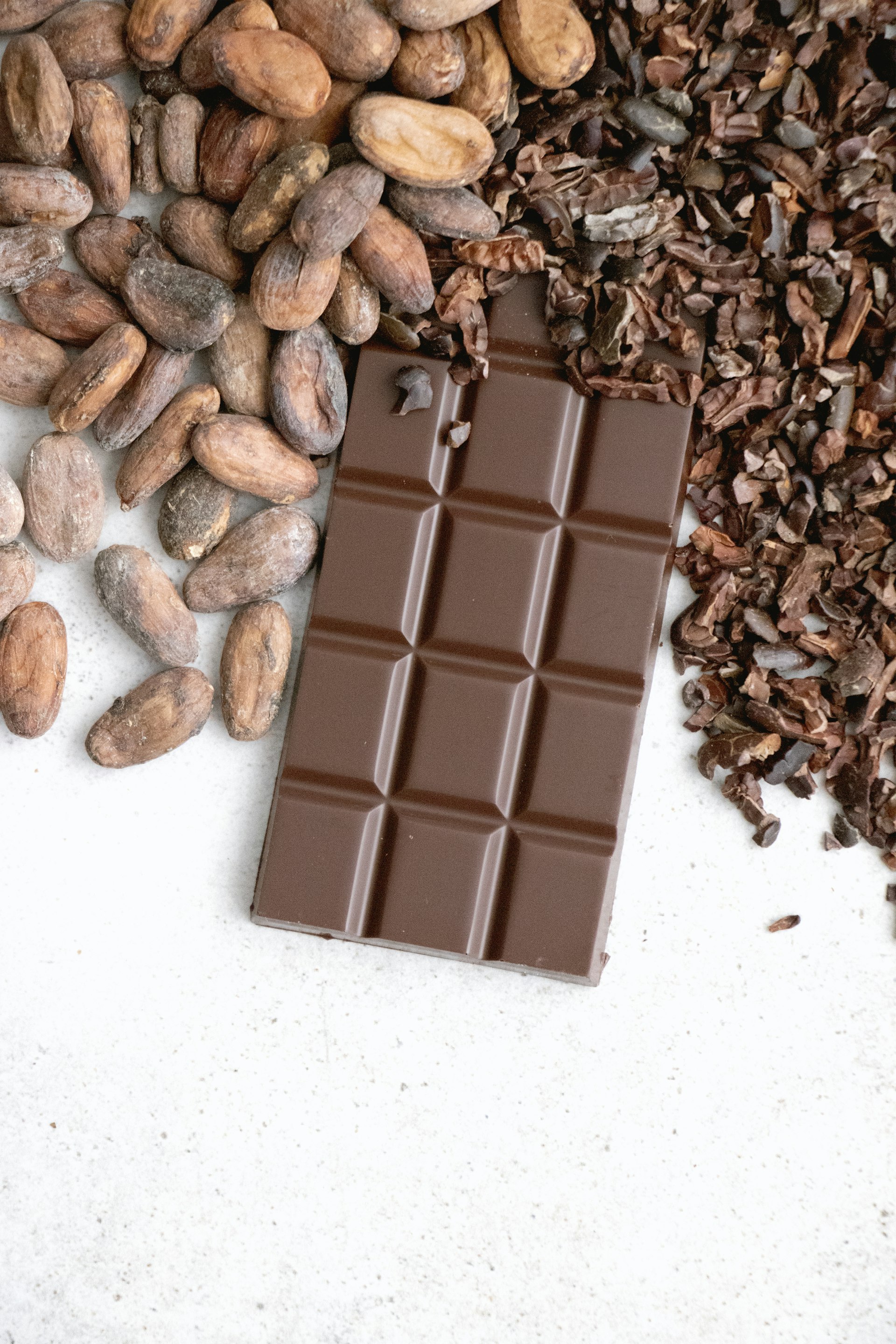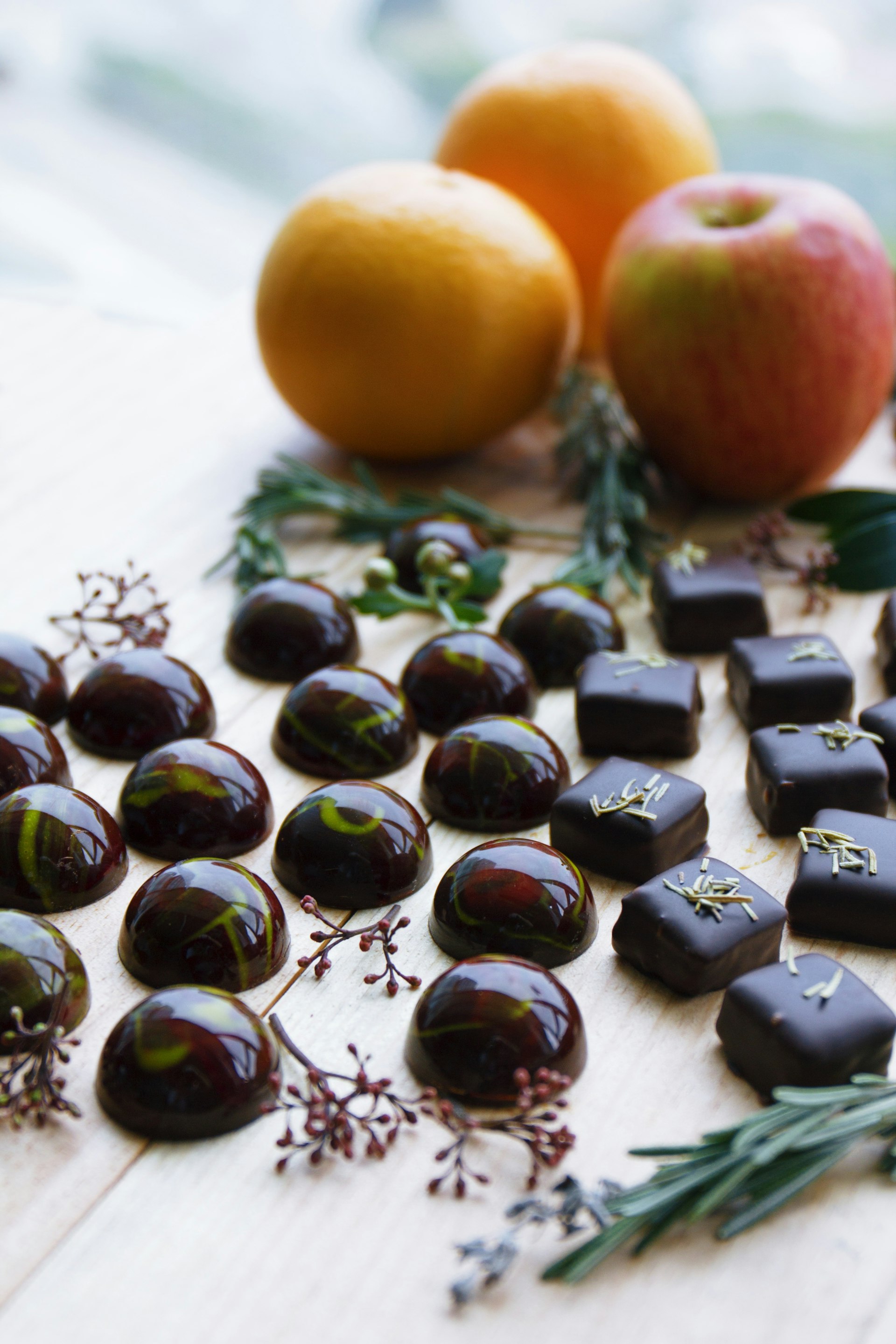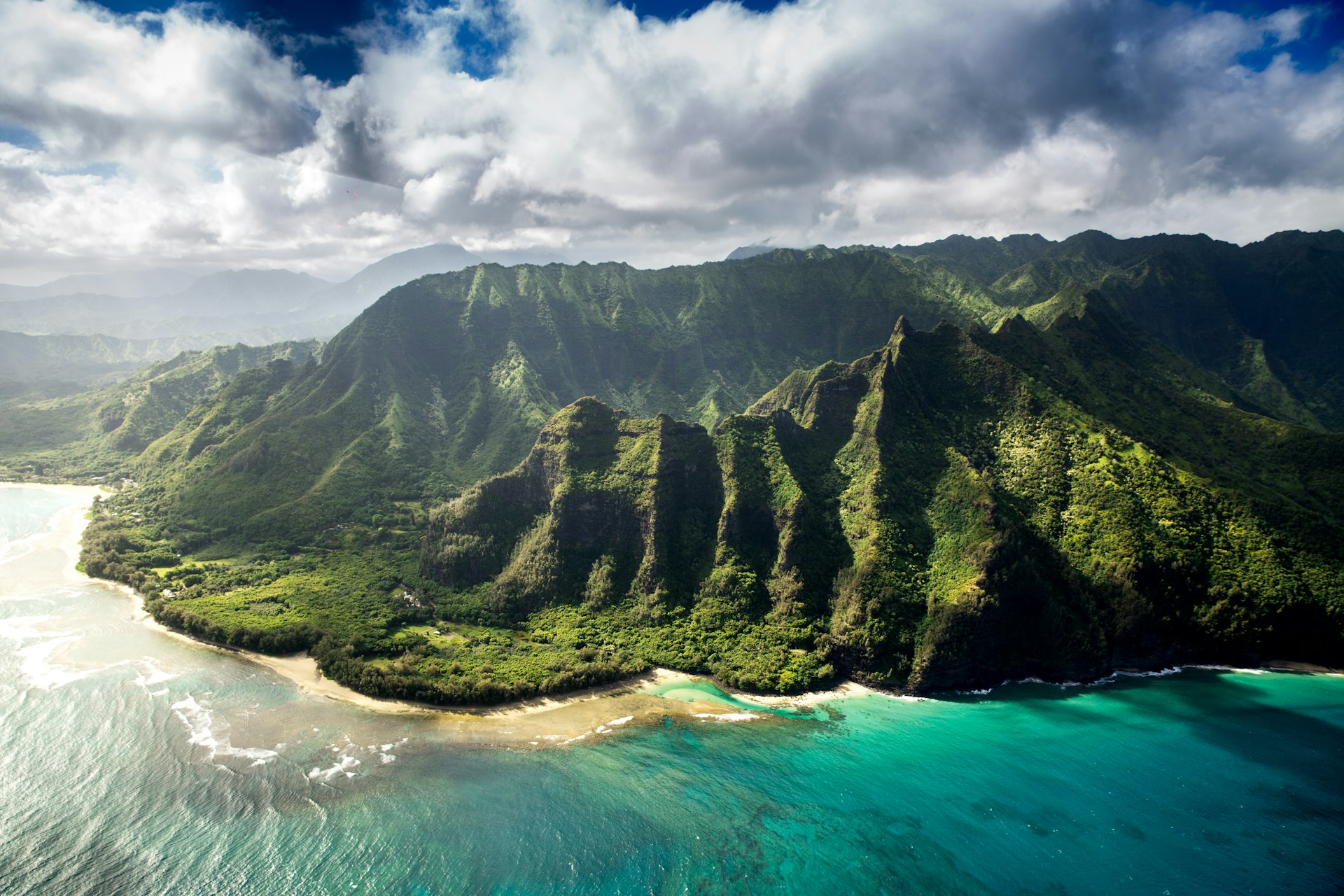
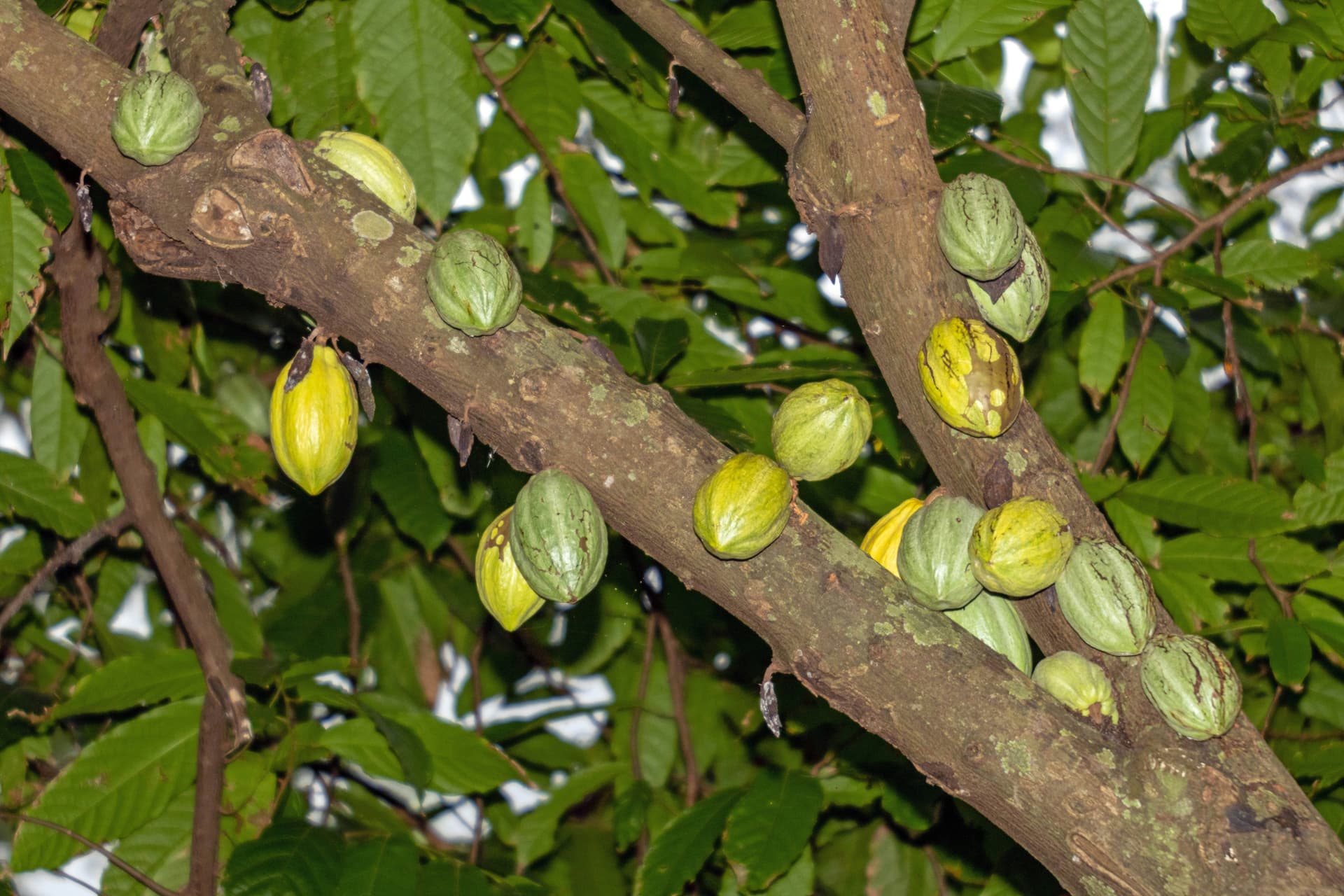
Look at a map of where cacao grows in the world, and you'll see a band hugging the equator—roughly 20 degrees north and south. At the extreme northern edge of this band, perched on volcanic islands in the middle of the Pacific, sits Hawaii: the "North Pole" of cacao cultivation.
The Cacao Belt
Cacao (Theobroma cacao) is a demanding crop. It requires:
- Consistent warmth: Temperatures never dropping below 68°F
- High humidity: 80% or higher
- Abundant rainfall: 60-100+ inches annually
- Protection from wind: Cacao leaves are delicate
- Shade: In nature, cacao grows as an understory tree
These requirements confine commercial cacao production to a narrow tropical band. The world's major producers—Côte d'Ivoire, Ghana, Indonesia, Ecuador—all sit within 10° of the equator.
Geographic Context
Hawaii's Big Island reaches as far south as 18.9° N latitude—just barely within the traditional cacao-growing zone. This makes Hawaii the northernmost significant cacao-growing region in the world.
Hawaii's Climate Advantages
Despite its marginal latitude, Hawaii offers several unique advantages for cacao:
Consistent Temperatures
Hawaii's location in the middle of the Pacific Ocean creates remarkably stable temperatures. The surrounding ocean moderates extremes, preventing the cold snaps that would kill cacao trees and the excessive heat that stresses them.
Average temperatures in Hawaiian cacao-growing areas:
- Daytime highs: 80-85°F
- Nighttime lows: 65-70°F
- Annual variation: Less than 10°F between seasons
Microclimates Galore
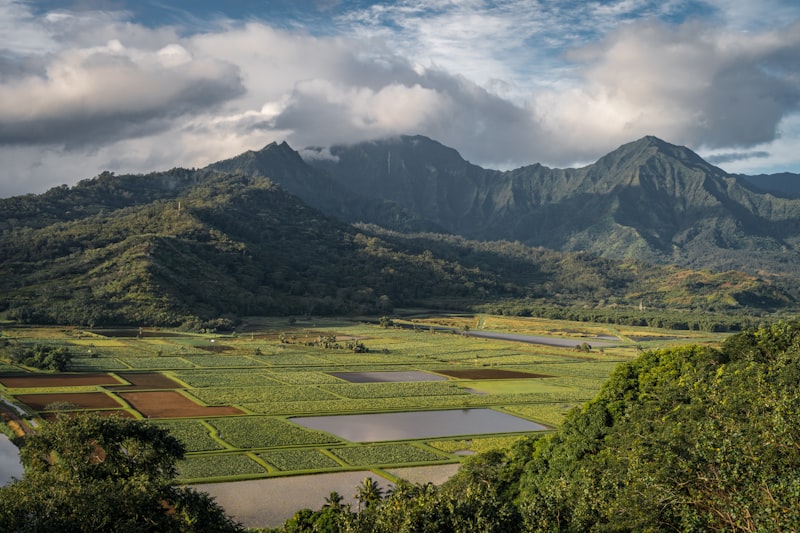
Hawaii's volcanic topography creates extraordinary microclimate diversity. Within a few miles, you can find:
- Wet windward slopes: 100+ inches of rain annually
- Dry leeward zones: 20-40 inches of rain
- Cloud forest: Constant moisture and fog
- Sunny lowlands: Ideal drying conditions
This allows farmers to leverage different zones for different stages of production. Beans might be grown and fermented on a misty windward slope, then transported to a sunny leeward farm for drying.
Volcanic Soil
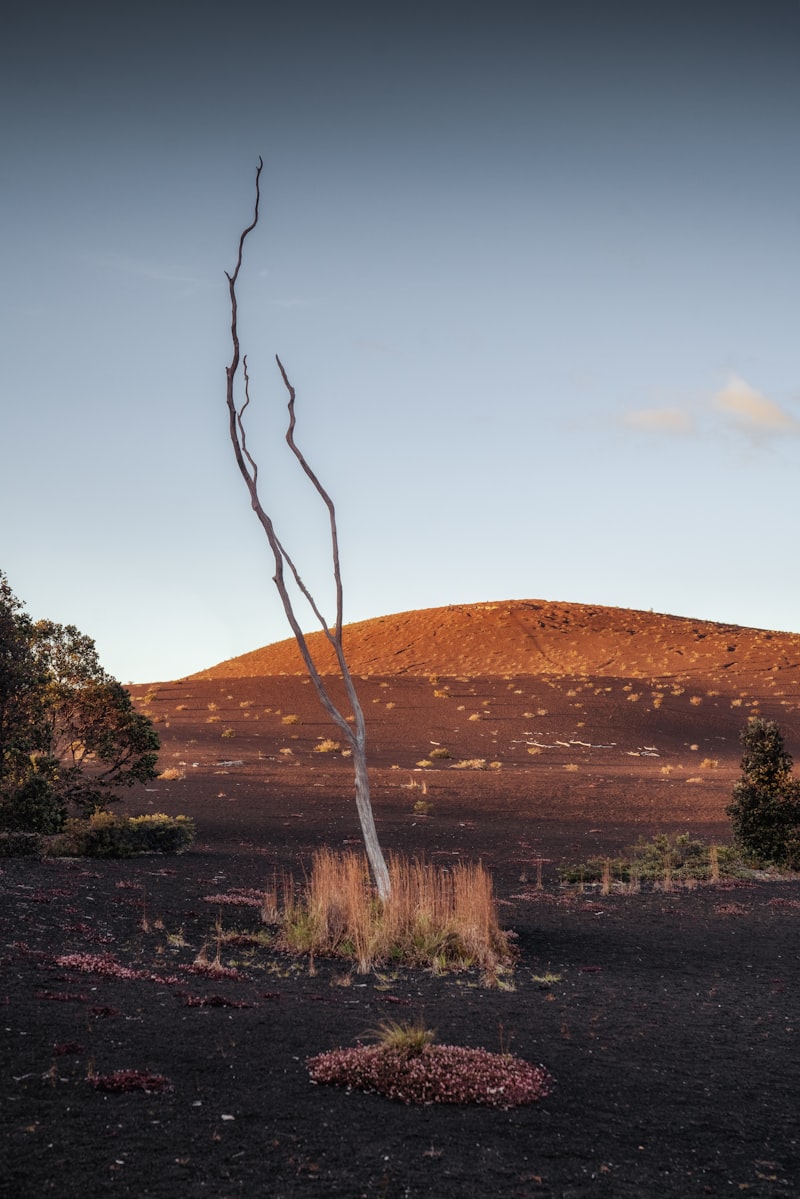
Hawaii's relatively young volcanic soils are rich in minerals and nutrients. This volcanic terroir imparts distinctive flavor characteristics to Hawaiian cacao—notes that reflect the islands' unique geology.
Year-Round Growing Season
Unlike mainland agricultural regions, Hawaii has no winter. Cacao trees produce pods continuously throughout the year, allowing for multiple harvest cycles and a steady supply of fresh beans.
The Disease-Free Advantage
Perhaps Hawaii's greatest advantage is what it doesn't have: the devastating diseases that plague cacao elsewhere.
Absent from Hawaii:
- Witches' broom: A fungal disease that has destroyed plantations across Brazil
- Frosty pod rot: Causes up to 90% crop losses in Central America
- Black pod disease: While present, less severe than in other regions
- Major insect pests: Geographic isolation limits pest populations
Why This Matters
Disease-free status allows Hawaiian farmers to grow diverse cacao varieties without risk of losing entire orchards. This genetic diversity contributes to the complexity of Hawaiian chocolate flavors.
Challenges at the Edge
Growing at the "North Pole" of cacao isn't without challenges:
Wind Exposure
Trade winds that make Hawaii pleasant for humans can strip leaves from cacao trees, reducing photosynthesis and stressing the plants. Many farms use windbreaks or select sheltered valleys for planting.
The Chinese Rose Beetle
This pest—one of the few that has reached Hawaii—feeds on young cacao leaves. Farmers use netting, traps, and careful monitoring to control populations.
Limited Suitable Land
Not all of Hawaii is suitable for cacao. Only certain microclimates provide the right combination of warmth, moisture, and protection. This limits expansion and keeps production volumes small.
High Labor Costs
Hawaiian labor costs are among the highest in agriculture. Every step of cacao production—from pruning to harvesting to fermentation—requires skilled human hands.
Quality Over Quantity
Hawaii's position at the edge of the cacao belt has shaped the industry's philosophy. Unable to compete on volume with equatorial giants, Hawaiian producers focus intensely on quality.
The results speak for themselves:
- Cocoa of Excellence: Hawaiian cacao consistently ranks among the world's best at this prestigious competition
- Heirloom Cacao Preservation: Hawaiian varieties have been designated as genetically and flavor-significant
- Price premium: Hawaiian chocolate commands prices reflecting its exceptional quality
The Terroir of the Islands
Wine lovers speak of terroir—the way geography, climate, and soil express themselves in flavor. Hawaiian chocolate has its own terroir:
- Volcanic minerals contribute earthy, sometimes mineral notes
- Tropical rainfall affects fermentation and flavor development
- Ocean influence moderates flavors with subtle salinity
- Diverse genetics create wide-ranging flavor profiles from farm to farm
Each Hawaiian island, and even different farms on the same island, produces distinctively different chocolate—a diversity that larger cacao-growing regions often can't match.
The Future at the North Pole
As climate change reshapes agriculture worldwide, Hawaii's stable oceanic climate becomes increasingly valuable. The islands may become an even more important center for cacao research and preservation—a genetic ark at the top of the cacao world.
For now, Hawaii's position at the northern extreme of cacao cultivation isn't a limitation. It's a distinction—proof that exceptional chocolate can emerge from the most unlikely places.
Explore Hawaiian chocolate from every island on our interactive map. Each location represents a unique expression of the islands' remarkable terroir.
Tags
Chocomaps Team
Editorial
Sharing stories about Hawaiian-grown cacao and the people who make exceptional chocolate in the islands.